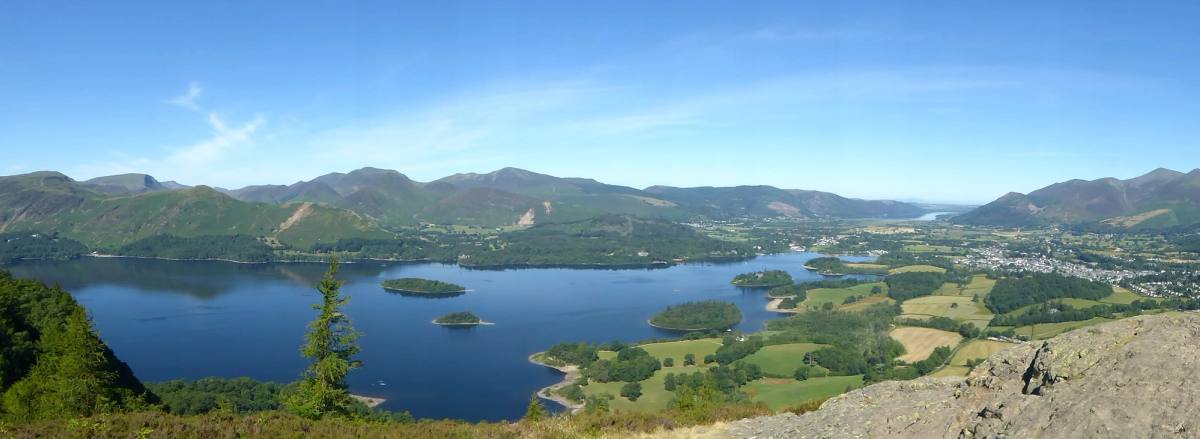

Four islands, and sometimes five
There are four islands in total on Derwentwater, all owned by the National Trust, as is much of the shoreline. Compared with islands on other lakes, the ones here are all regular in shape.
There is also one floating island, which appears sporadically towards the end of summer.
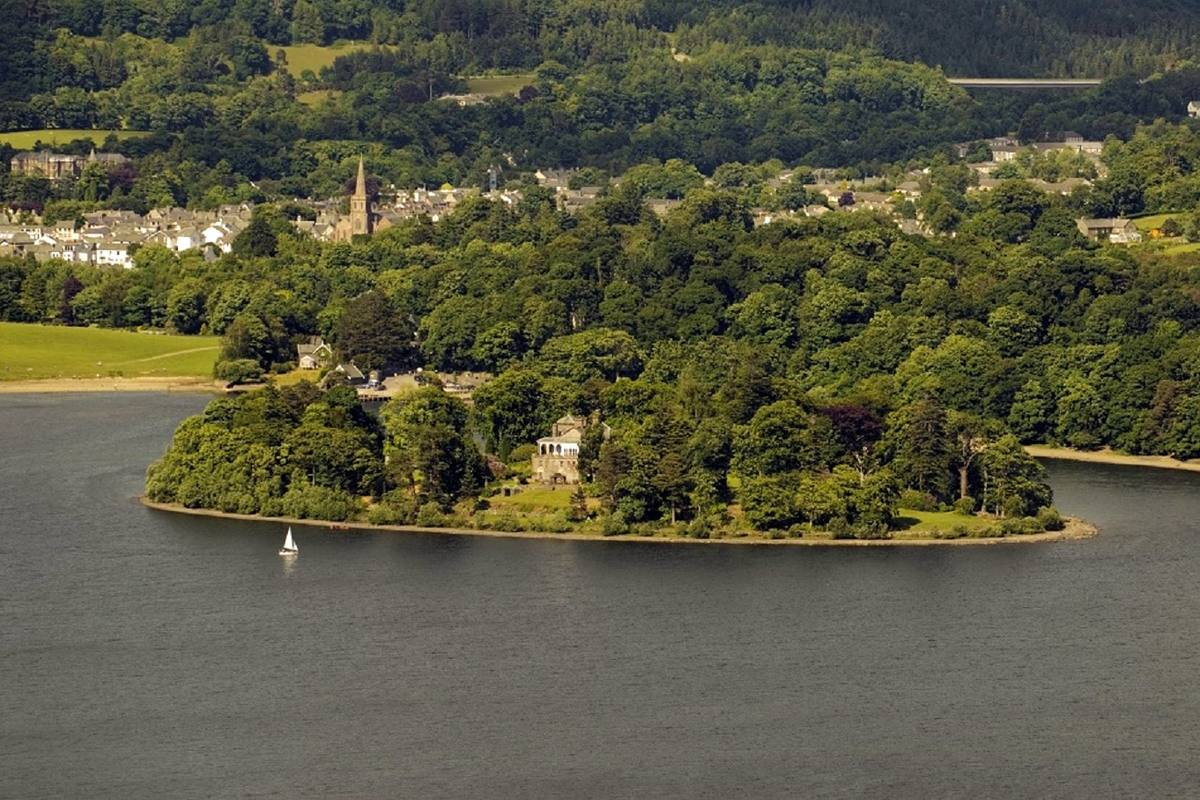
Derwent Isle
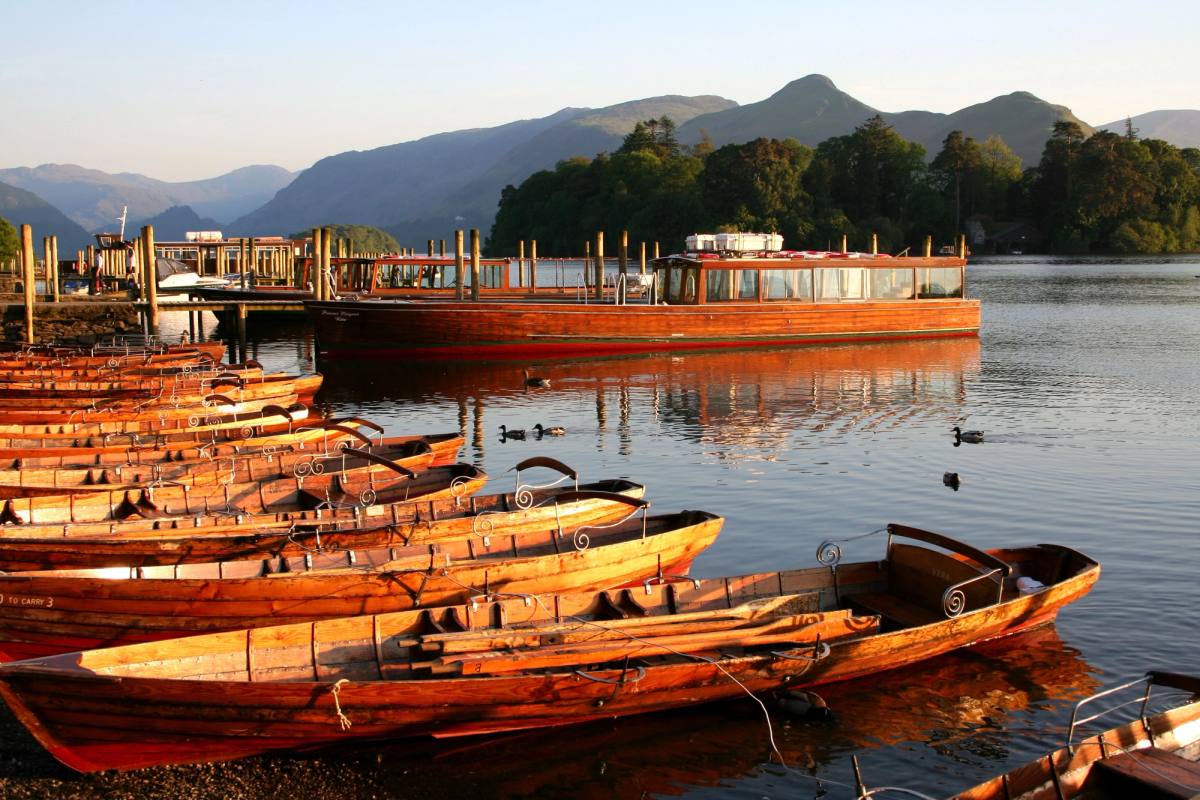
Close to the boat landings and west of Friar’s Crag. Shielded from view by woodland, visitors to the landings can barely see the impressive house on it — the only island that still has a house. Access is by boat, and the boat-house is clearly visible from the landings.
The island and house are leased by the National Trust to tenants, and the house is open to the public for organised visits five times a year.
It was reputedly called Vicar’s Island originally, being the property of Fountains Abbey before the dissolution of the monasteries, and was probably first settled by the German copper miners of the sixteenth century.
The grand house was built in the late 1770s by a prominent character, Joseph Pocklington, who put up the house and several follies. He is best remembered for spectacular firework displays on the lakeshore and for the fake naval battles staged around the island — with a fair on Crow Park, and a regatta of teams rowing, sailing and swimming round it.
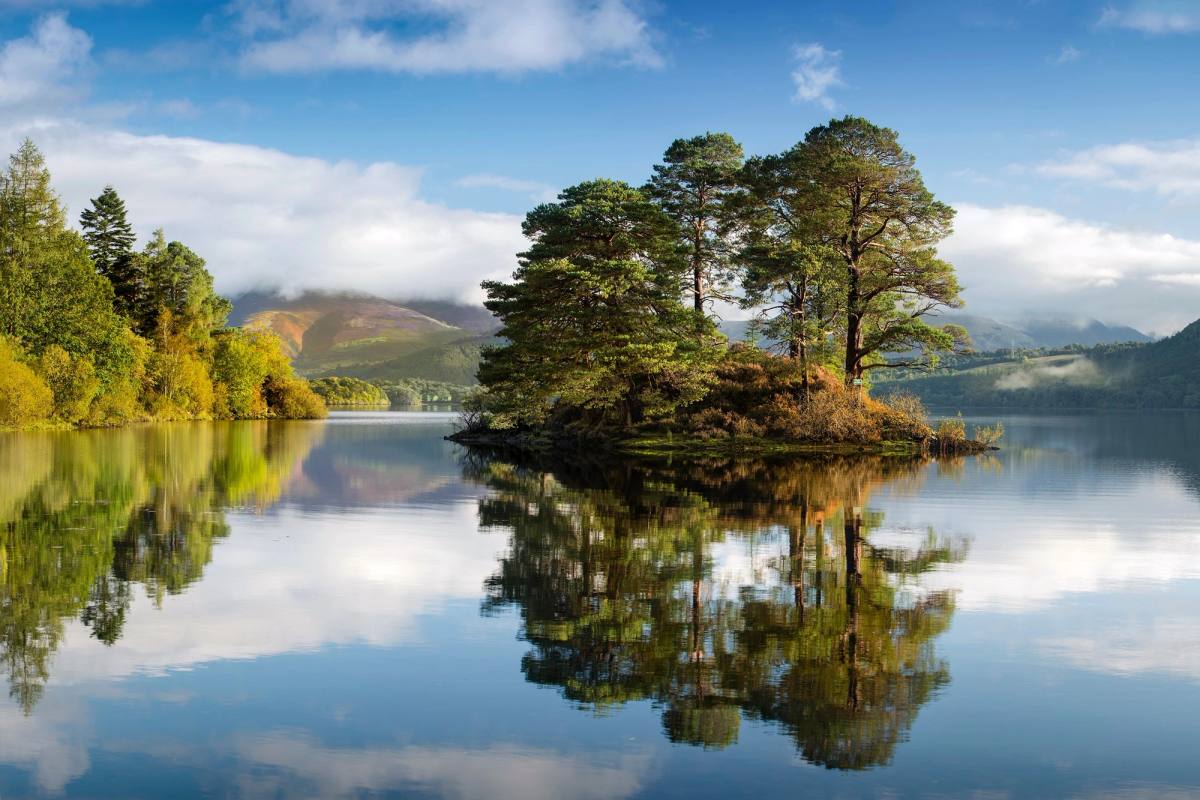
Lord’s Island
Close to Derwent Isle, in the inlet formed by Friar’s Crag. It was once home to the Earls of Derwentwater, until the Jacobite rebellion.
A house was built here around 1450, of which only the foundations remain; the mansion was destroyed during the civil wars around 1651. Access was by a drawbridge connecting it to the mainland.
Trees grew on the island and gave homes to thousands of rooks, so that for a time it was known as Crow Island. The trees have gone now, and so have the rooks.
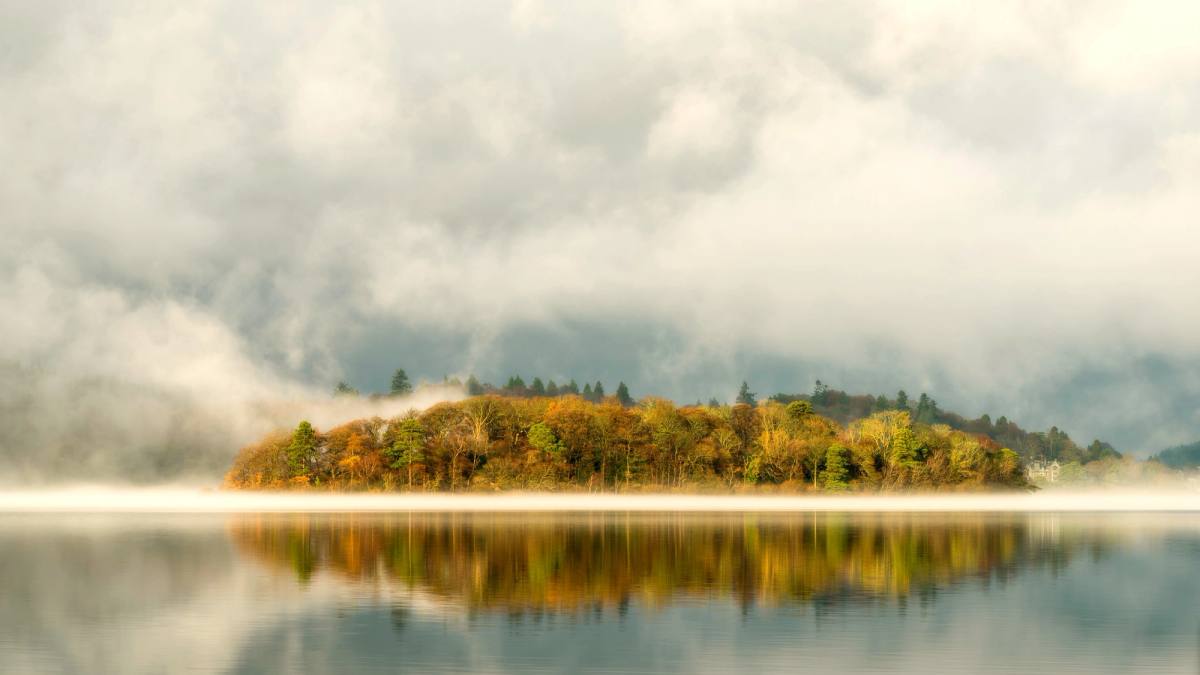
St Herbert’s Island
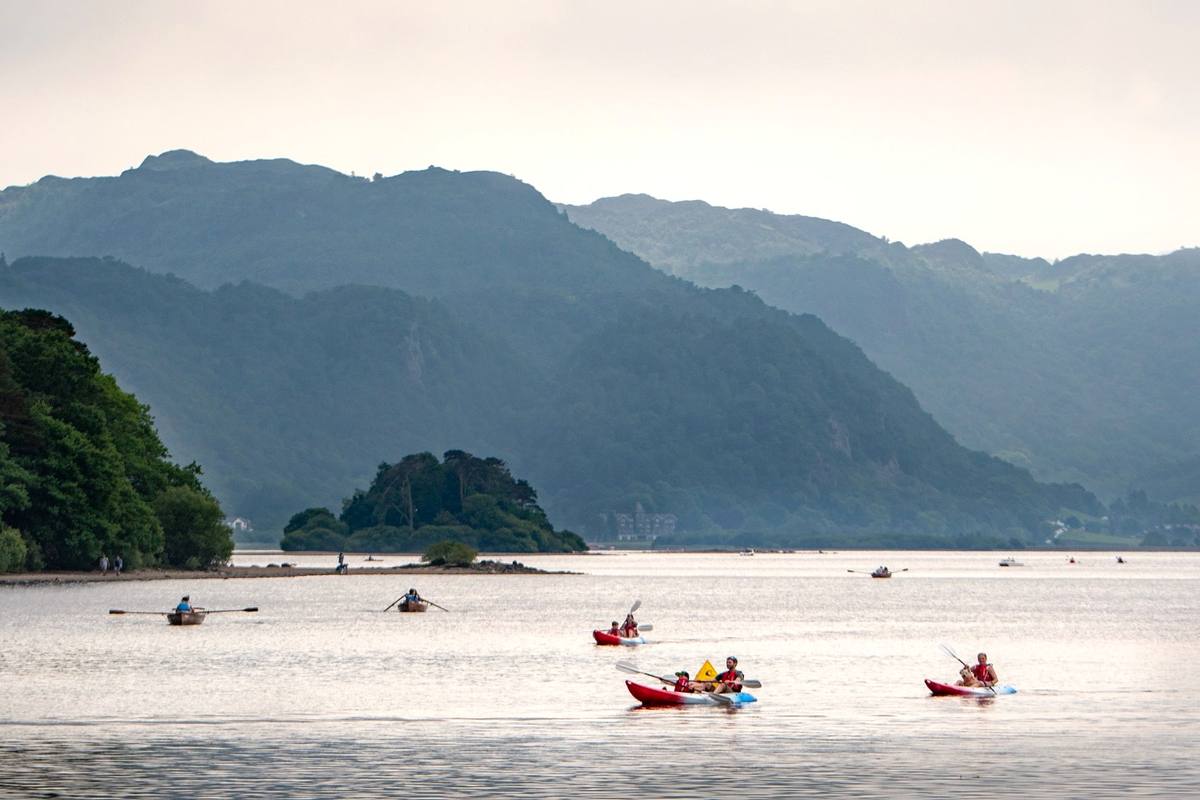
In the middle of the lake, and named after the seventh-century hermit St Herbert, who brought Christianity to the area in AD 685 and took sanctuary here. The remains of a cell in the island’s undergrowth are the evidence of the hermitage.
Friars Crag takes its name from the monks who sailed over to the island on pilgrimage to visit the saint.
The island also features as Owl Island in Beatrix Potter’s Squirrel Nutkin, and was used in the 2016 Swallows and Amazons film. Boat users are allowed to land on it.
Rampsholme Island
Considerably smaller than the other three, and named after the wild garlic that grows in profusion on it.
Map
- Derwent Isle
- Lord’s Island
- St Herbert’s Island
- Rampsholme Island
- Keswick Launch boat landings
Start your trip here
Plan your perfect escape with our Keswick guide. From places to stay and things to do, where to eat, explore and unwind.
Stories from our blog
See all blog posts Blog
BlogBook Direct
In today's world, booking accommodation has never been easier. With the advent of online travel agencies (OTAs) like Booking.com, Expedia, and Airbnb, people can book their accommodation in just a few
 Blog
BlogPlanning Your Stay In Keswick
Keswick is a vibrant and lively town nestled in a stunning part of the Lake District and theres something for everyone here. Read on for some inspiration and ideas for where to stay and what to do whe
 Blog
BlogFestive Walks to do over the Christmas Period
If you are staying in Keswick or the North Lakes over the Christmas period, you are probably planning on going for a walk?